

The 500% Tariff Gambit: Washington Tests the Limits of Global South Sovereignty
A proposed 500% US tariff on countries trading with Russia forces Global South powers to choose between market access and strategic autonomy, accelerating shifts toward a fragmented global economy.

What if access to the U.S. market came with a simple condition: align with Washington—or lose it entirely?
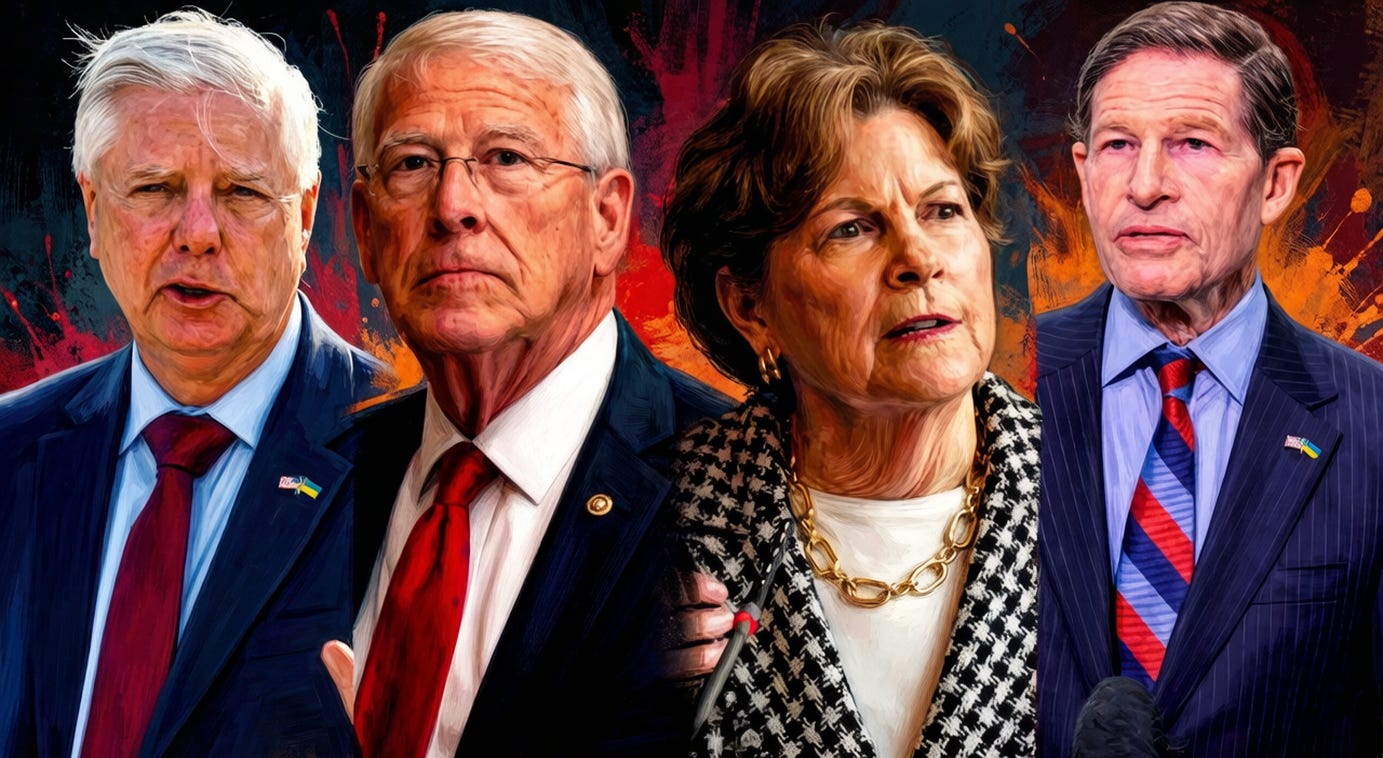
That is the logic behind a new bipartisan proposal emerging from the U.S. Senate. On July 11, 2026, Senators Lindsey Graham, Roger Wicker, Richard Blumenthal, and Jeanne Shaheen announced an agreement with the Trump administration on the Sanctioning Russia Act—a bill that could fundamentally reshape how economic power is exercised in the global system.
This is not a conventional sanctions package. It does not primarily target Russia. It targets everyone else.
At the center of the legislation is a sweeping mechanism: secondary tariffs of up to 500% on any country that continues to purchase Russian oil, gas, or uranium. If those countries fail to comply, the penalties escalate—another 500% every 90 days.
This is economic pressure at a scale rarely attempted. And it raises a deeper question: how much sovereignty can countries retain in a system where market access is increasingly tied to geopolitical alignment?
The Real Target: Strategic Autonomy
The immediate pressure falls on the Global South—particularly BRICS economies like India and China, which together account for roughly 70% of Russia’s energy exports.
For India, the timing is especially delicate. New Delhi is closing in on the final phase of a major trade agreement with Washington. Yet this proposal introduces a fundamental uncertainty: can long-term economic partnerships with the U.S. coexist with policies that can abruptly penalize core national interests?
That question extends far beyond India.
Because what this bill ultimately tests is whether countries can maintain independent economic strategies in a system where access to the U.S. market is increasingly conditioned on geopolitical alignment.
Washington’s argument is straightforward: these measures are necessary to impose real costs on Russia and force movement on Ukraine. But from the perspective of many emerging economies, the message may sound different—less about conflict resolution, more about enforced compliance.
The Credibility Problem
There is also a structural contradiction embedded in the policy.
The United States itself remains dependent on Russian nuclear inputs. Despite formal restrictions, imports of low-enriched uranium have continued under waiver systems. In 2024 alone, the U.S. brought in $624 million worth of enriched uranium and plutonium from Russia.
Today, more than a quarter of U.S. enriched uranium demand still relies on Russian supply.
Domestic production is expanding, but it will take years before those projects meaningfully reduce dependence. Until then, Washington is asking other countries to sever ties it has not yet been able to fully replace.
That weakens the credibility of the broader strategy.
Pressure Meets Fragility
The timing of this push is also notable.
In May 2026, the U.S. trade deficit surged by 42.2%, reaching $77.6 billion. Much of that increase was driven by imports tied to artificial intelligence and advanced manufacturing—sectors the U.S. is actively trying to scale.
Introducing tariffs at the level now being proposed risks feeding directly into those pressures.
Critics, including Senator Rand Paul, have warned that such measures could backfire—raising domestic prices, disrupting supply chains, and adding strain to the dollar. Whether or not those outcomes materialize, the perception of instability is already shaping how other economies respond.
The System Adjusts
And adjustment is already underway.
China has increased imports of Russian uranium while simultaneously expanding nuclear-related exports to the United States. The result is a strategic buffering role: absorbing geopolitical risk on one side while maintaining commercial leverage on the other.
India’s position is more constrained. Earlier this year, it secured relief from a 25% U.S. tariff by increasing imports of American energy and technology. Now, it faces the possibility of far more severe penalties—despite being framed as a key strategic partner.
The signal is hard to ignore: alignment does not necessarily guarantee stability.
Beyond Sanctions
What is emerging is something larger than a dispute over Russia.
This is about the growing use of trade as an instrument of coercion—and the limits of that approach in a world that is no longer unipolar.
Because the more aggressively access to Western markets is weaponized, the stronger the incentive becomes to build alternatives: parallel payment systems, regional trade corridors, and new financial architectures designed to reduce exposure.
The question is no longer whether the Global South will respond.
It is how fast.
📌 Subscribe to Think BRICS for weekly geopolitical video analysis beyond Western narratives. Follow also our new channels BRICS Business and Think BRICS Chronicles.
The Global South should be aware of Kissinger’s remarks: To be an enemy of the United States is dangerous, to be a friend is deadly.
US continues to isolate itself.
.-)
the more aggressively access to Western markets is weaponized, the stronger the incentive becomes to build alternatives, this is logical, this is how Human beings survive. The West proves by their actions that they have no idea how Human nature works. I suppose when you see their actions they don't care about Human beings.