

The Great Decapitation: Analyzing the Fall of China’s Military Elite
Probes into Zhang Youxia and Liu Zhenli decapitate China’s top command. We weigh official graft claims against rumors of failed coups and leaked nuclear secrets.

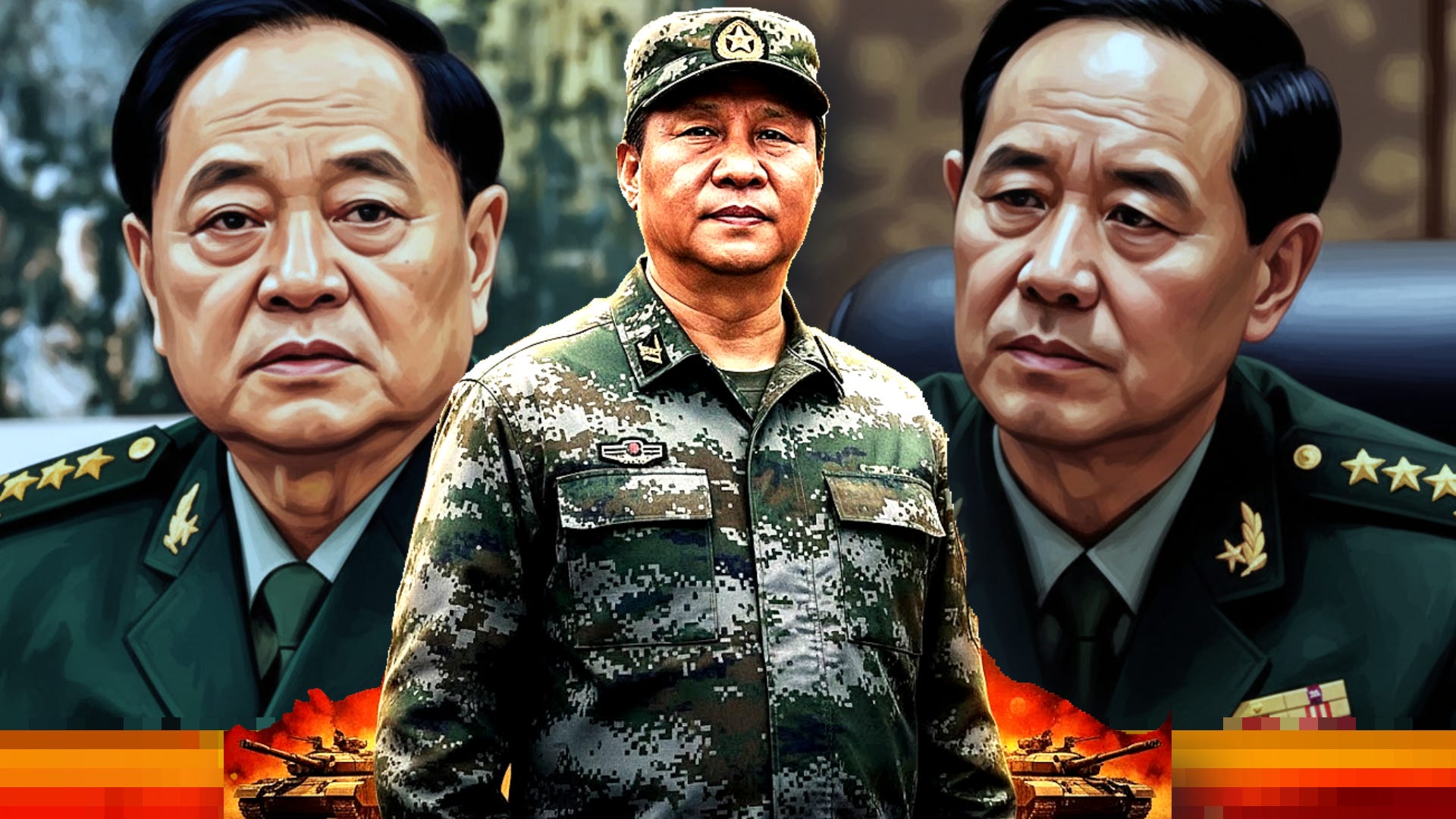
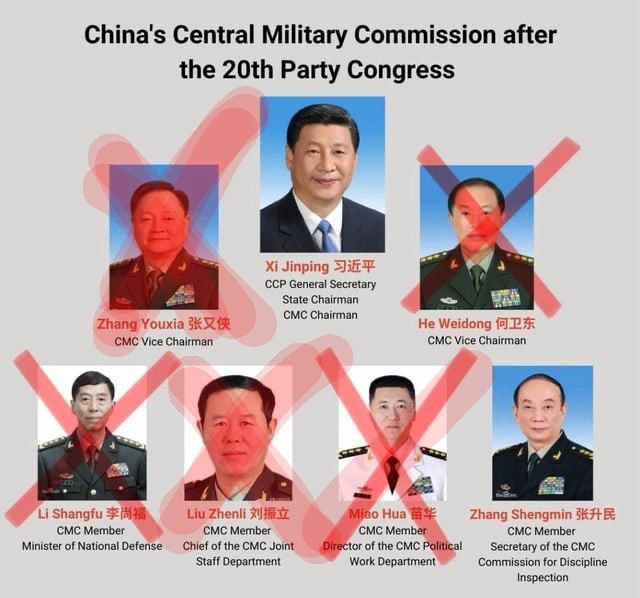
The geopolitical landscape of East Asia shifted significantly on January 24, 2026, when the Chinese Ministry of National Defense (China) officially announced that two of the nation’s highest-ranking military figures were under formal investigation. Zhang Youxia, Vice Chairman of the Central Military Commission (CMC) and a member of the Political Bureau, along with Liu Zhenli, Chief of Staff of the CMC Joint Staff Department, are suspected of “serious violations of discipline and law”.
This announcement marks a historic earthquake within the People’s Liberation Army (PLA), effectively dismantling the top tier of China’s military command. While official channels frame the move as a necessary step in a “protracted and all-out battle” against corruption, international observers and unofficial sources have filled the silence with a cacophony of theories ranging from failed coups to the leak of nuclear secrets.
The Official Stance: Purity and Absolute Leadership
The official narrative provided by the PLA Daily (China) characterizes the investigation as a “decisive passage” in the ongoing rectification of the military. According to an editorial from the flagship newspaper, Zhang and Liu “gravely betrayed the trust” of the Communist Party of China (CPC) and “seriously trampled on and undermined the system of ultimate responsibility resting with the CMC chairman,” referring to Xi Jinping.
Key official justifications include:
Zero Tolerance: The CPC Central Committee (China) asserts that “no place is out of bounds” and “no ground is left unturned” in the fight against graft.
Combat Readiness: The PLA Daily (China) argues that corruption is a “stumbling block” and that a “purer” military possesses greater combat capacity to achieve the “centenary goals” of 2027.
Political Loyalty: Beyond simple financial crimes, the officials are accused of “fomenting political problems” that threatened the Party’s “absolute leadership over the armed forces”.
Coup Rumors and the “Jingxi Hotel” Incident: Fact vs. Speculation
In the vacuum of transparent information, dramatic narratives have emerged. The Epoch Times (USA/Falun Gong) reported that on the evening of January 18, 2026, Zhang Youxia allegedly attempted a coup at the Jingxi Hotel in Beijing. According to this version, Zhang planned to arrest Xi Jinping, but the plan leaked two hours prior, leading to a shootout between rival guards that supposedly left 40 people dead.
However, Samuele Soddu and Dazibao (Italy) urge caution, noting that while these rumors are “fascinating,” no one in the center of Beijing actually noticed a shootout of that magnitude. Dazibao (Italy) points out that this is the third such rumor of a coup in six months, often appearing whenever a high-level official is arrested. Furthermore, Lev Vershinin (Russia/Israel), a political commentator, dismissed the idea of a coup attempt during a closed meeting as “complete nonsense,” arguing that leaks from such high-level bodies are virtually impossible.
Strategic Betrayal: The Nuclear Secret Theory
A more targeted accusation comes from the Wall Street Journal (USA). Citing anonymous sources, the paper reports that Zhang Youxia is accused of the most “shocking” crime: leaking fundamental technical data on nuclear weapons to the United States.
The evidence supposedly stems from Gu Jun, the former general manager of the China National Nuclear Corp (China), who was himself placed under investigation just days before Zhang. Dazibao (Italy) notes that if true, this would represent a “systemic” security breach connecting the nuclear sector directly to the military’s top brass. However, Neil Thomas (USA), a researcher at the Asia Society, expressed skepticism on social media, finding it “hard to believe” that a war veteran like Zhang would betray his life’s work to China’s primary competitor.
Geopolitical Implications: Experience vs. Loyalty
The removal of Zhang Youxia is particularly significant due to his unique profile within the PLA.
War Experience: At 75, Zhang was one of the few serving generals with direct combat experience, having fought in the 1979 war with Vietnam. David Stilwell (USA), a former Air Force general, described Zhang to Reuters (UK) as a “rational voice” and a professional soldier who was respected by the US military.
The 2027 Deadline: The Washington Post (USA) observes that this “earthquake” in the command chain occurs as China approaches its 2027 goal for military modernization.
The “Purge” Lexicon: Andy Boreham (New Zealand/China-based), via his channel Reports on China, criticizes Western media for using the word “purge” to imply an illegitimate, “sinister” removal, whereas he argues the process follows a long-standing “successful anti-corruption campaign”.
From a geopolitical angle, the Central News Agency (Taiwan) reports a divide in how this affects regional stability. Some analysts, like Su Ziyun (Taiwan) of the Institute for National Defense and Security Research, believe that the need to rebuild the command hierarchy may decrease the likelihood of an attack on Taiwan in the short term, as the military is in “chaos”. Conversely, Jie Zhong (Taiwan), an assistant professor at Tamkang University, warns that a military led by younger “loyalists” who lack experience may be more prone to “aggressive” or “radical” actions to prove their worth to Xi Jinping.
The Structural Conflict: Civil vs. Military Power
Dazibao (Italy) provides a historical lens, suggesting the current tension reflects a deeper conflict between civil institutions (the Party) and the military institution. Historically, the PLA was an economic powerhouse, producing everything from bicycles to refrigerators under Deng Xiaoping. Xi Jinping’s reforms, beginning in 2012, aimed to strip the military of these economic interests and ensure its absolute subordination to the Party—a process that Christopher Johnson (USA), a former CIA analyst, calls the “epilogue” of a long-standing campaign.
The editorial in PLA Daily (China) reinforces this by stating that power must be “confined within the cage of institutional constraints”. To the Party, Zhang’s alleged “factions” and “clientele networks” represented a dangerous “counter-power”.
Perspectives on the Future
As the dust settles, several interpretations remain on the table:
Personalization of Power: Many Western outlets, such as the Financial Times (UK), see this as Xi Jinping’s final move to eliminate any center of military power that is not personally loyal to him.
Systemic Failure: Commentators like Han Tianchao (USA), a former diplomat, argue that “the more you cleanse, the more you fear,” suggesting that constant purges create a “brittle” system based on terror rather than professional competence.
• The “Totalitarian Acceleration”: Jiang Feng (USA), a veteran commentator, suggests that by removing pragmatic veterans like Zhang, Xi has removed the “last brake pads” from a decaying machine, potentially accelerating its path toward crisis.
A Call for Debate
The fall of Zhang Youxia is more than just a domestic Chinese affair; it is a geopolitical event that impacts global security, nuclear stability, and the future of the Taiwan Strait. While the Chinese state insists this is a victory for “purity” and “combat readiness,” the sudden absence of a seasoned high command raises vital questions.
• Does the removal of experienced, “rational” generals make conflict more or less likely?
• Is “zero tolerance” for corruption a genuine pursuit of efficiency, or a tool for absolute political consolidation?
• How should the international community engage with a military leadership that appears to be in a state of perpetual “rectification”?
We invite our readers to join this debate. Is this a sign of a strengthening state or a system entering a “nervous” and “hard” form of management as war approaches?. Your insights into the balance between military professionalism and political loyalty are welcomed below.
Join the Conversation:
📌 Subscribe to Think BRICS for weekly geopolitical video analysis beyond Western narratives.
Removing two top leaders of the Chinese Armed Forces does not necessarily mean that there will be huge effects on the lower echelons as well as the rank-and-file. Remember, we are talking about only 2 senior officers.
This is not the same as Stalin's purges of the Soviet armed Forces during the 1930s where thousands of officers of all levels and ranks were removed, with many of them being executed. This factor alone made the Soviet Armed Forces fr less prepared for the German invasion in 1941.
However, even here some historians argue that Stalin's officer purges actually made the Soviet Armed Forces a much better fighting force. Yet, this is doubtful considering that so many officer echelons were affected. And we cannot assume that all these officers were of poor quality.
In respected documentation of the Soviet Armed Forces of WWII (ie: "Stalin's War" by Sean McMeekin, OSS\CIA German officer Soviet capabilities analysis) it is clearly shown that the Soviet Armed Forces suffered from a variety of maladies during the war, and which were present up to its conclusion, making the Soviet victory one of logistics and not military acumen.
The Chinese government is simply doing their job. They investigated themselves and found some bad apples. The high ranking of these offices proved to the world that the CPC is serious about their anti-corruption campaign that noone cannot be touch. Something you would never seen in the EU or US government (hint Epstein files).