

Strike Pace: Will War Between the US and Iran Resume?
The crisis in the Strait of Hormuz has not derailed negotiations — but it hasn’t brought a compromise any closer either.

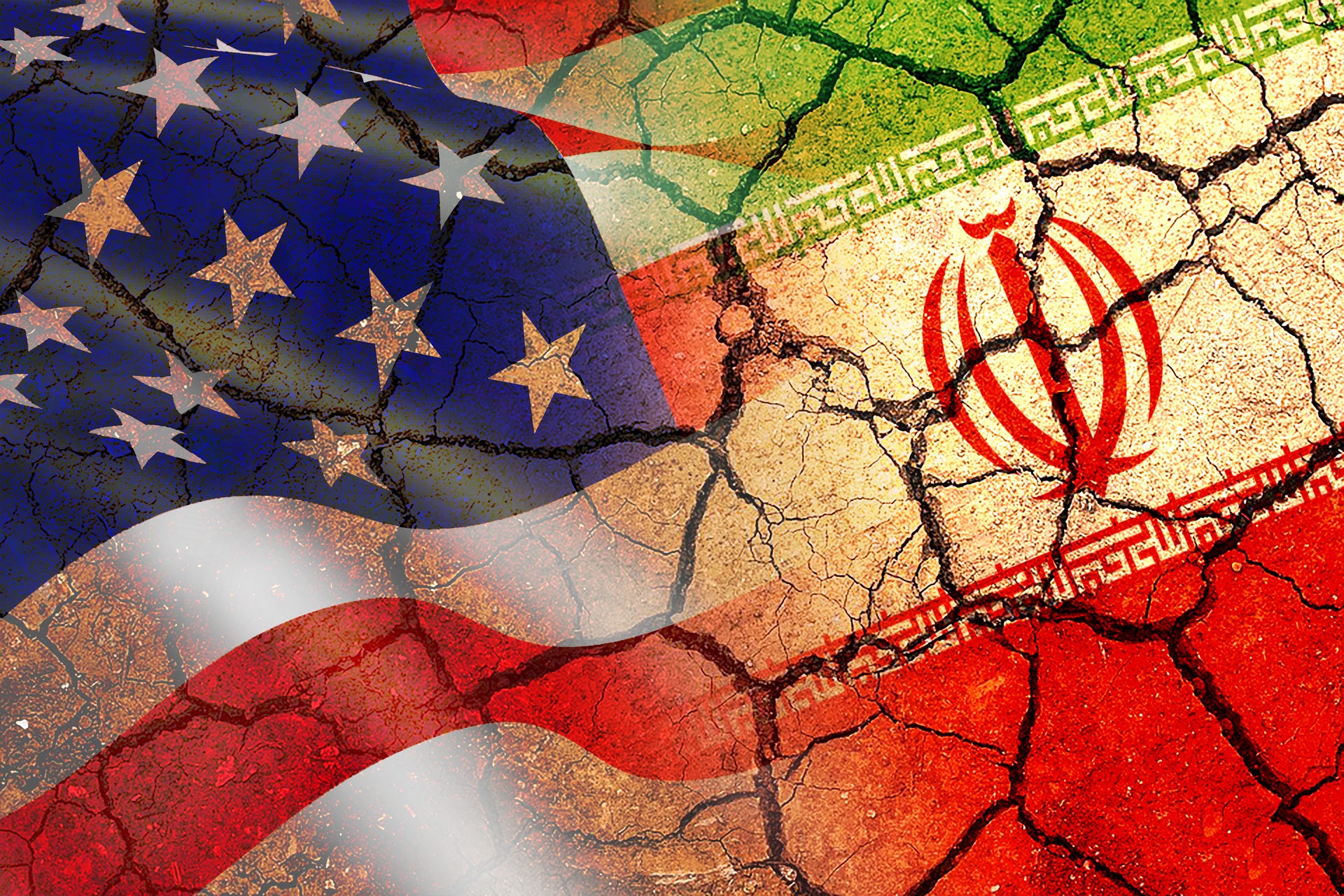
Originally published on Izvestia by Leonid Tsukanov. Republished with permission.
The US and Iran exchanged strikes amid mounting tensions in the Strait of Hormuz. The trigger for the conflict was the downing of an American multi-purpose helicopter, AH-64 Apache,9th of June, in the territorial waters of Oman — which, according to President Donald Trump, was the result of an Iranian attack. In response, the United States struck Iranian air defense systems and logistics centers, while Tehran attacked military bases across the region. Trump continued issuing threats. Nevertheless, despite a series of incidents, experts interviewed by Izvestia believe the risks of renewed active hostilities between the two countries remain negligible.
The Hormuz Escalation
The escalation in the Strait of Hormuz began following the crash of the AH-64 Apache helicopter. The incident occurred near the Strait of Hormuz, and according to American sources, it was caused by “fire contact“ with Iranian air defense systems. Although the Pentagon’s investigation results have not yet been published, some American media outlets, citing sources, reported that the helicopter had been struck by a kamikaze drone Shahed. This version remains the primary working theory, as the helicopter had previously been escorting commercial vessels through the Strait of Hormuz and went down in the territorial waters of Oman. The crew survived.
Shortly after the incident, US Central Command (CENTCOM) launched limited operations against Iranian military targets. In a series of phases, Iranian air defense systems, ground-based command posts, and radar stations were struck — in total, more than two dozen targets were identified. The strikes were carried out near the cities of Bandar Abbas and Minab, as well as the Qeshm and Sirik areas. CENTCOM stated that “this operation was a proportionate response to unprovoked Iranian aggression.”
Washington Pulls Back
Shortly thereafter, the US announced a halt to its attacks, citing the achievement of its designated objectives. Alexei Yurkov, a senior researcher at the Center for Middle Eastern Studies at IMEMO, believes the speed of Washington’s de-escalation may have been linked to a low tolerance for personnel casualties — a defining characteristic of American and Western strategic culture. He noted that while there were no fatalities in this particular incident, the risk was real, and the Trump administration has already demonstrated sensitivity to that level of losses.
Iran, for its part, characterized the US actions as naked military aggression. Official Tehran claims that one of the strikes hit civilian infrastructure, including a freshwater reservoir and a communications tower. In response, the Islamic Revolutionary Guard Corps (IRGC) struck 21 targets in Persian Gulf states, including Bahrain and Kuwait. Jordan also reported intercepting several missiles aimed at one of its air bases.
Tehran’s Calculated Ambiguity
The Iranian Foreign Ministry declared that it was not seeking further escalation, framing the helicopter incident as a “fatal accident.” Yet Tehran is using the episode to project its resolve to control the situation in the Strait of Hormuz. Foreign Minister Abbas Araghchi stated that foreign countries with forces stationed near Iran’s borders would be better off withdrawing from the region, warning them not to “find themselves in the crossfire.”
Political analyst Gevorgyan noted that this kind of deliberate ambiguity on Tehran’s part serves both domestic and foreign policy objectives. The publicly stated disproportionality of the response satisfies domestic audiences, while the actual retaliatory actions remain sufficiently contained — leaving the country room for diplomatic maneuvering.
Nuclear Talks Stall
Despite the escalation, the parties have recently made progress on the negotiating track. According to The New York Times, citing White House sources, Washington and Tehran have narrowed the issue of Iran’s nuclear program down to four key points. These reportedly include a long-term suspension of uranium enrichment in Iran, the dilution or mixing of already enriched material to safe levels, Tehran’s agreement to unannounced IAEA inspections, and the dismantling of those nuclear facilities that are not operational but are integrated into the Islamic Republic’s peaceful nuclear program.
If this is the case, the U.S. has significantly scaled back its demands—in particular, the condition regarding the transfer of Iran’s stockpile of highly enriched uranium to U.S. representatives has been removed from the agenda.
Other sticking points remain within the framework of a potential deal between Washington and Tehran. Despite efforts to streamline the agenda, confidence-building has so far proven elusive. As Gevorgyan noted, the Apache helicopter incident has become one of the factors reinforcing the unacceptability of foreign military presence near Iran’s borders — and is hardening negotiating positions on the status of the Strait of Hormuz.
Balancing on the Edge
On the whole, these periodic flare-ups are not disrupting the overall balance between Iran and the US. Both countries continue to navigate between military and diplomatic action, preserving the appearance of a commitment to compromise while defending their respective “red lines.” However, this strategy is losing its effectiveness as the frequency of strike exchanges decreases, pushing both sides to seek new security formulas. Trump has already declared that Tehran will “pay” for the delay in reaching a deal — but what that will look like remains unclear, given his previous contradictory statements.
📌 Subscribe to Think BRICS for weekly geopolitical video analysis beyond Western narratives. Follow also our new channels BRICS Business and Think BRICS Chronicles.
I assume the 3 Indian sailors killed in alleged strike by the US on an oil tanker is mere "collateral damage", not casualties.
https://www.aljazeera.com/video/newsfeed/2026/6/11/three-indian-sailors-killed-in-us-strike-on-oil-tanker