

No Short-Term Decoupling Between China and the US: Politicians Clash, While Reality Embraces Integration
Bilateral trade data reveals that despite political clashes and decoupling rhetoric, the US and Chinese economies remain structurally interlocked, driven by market forces, AI, and global supply chains


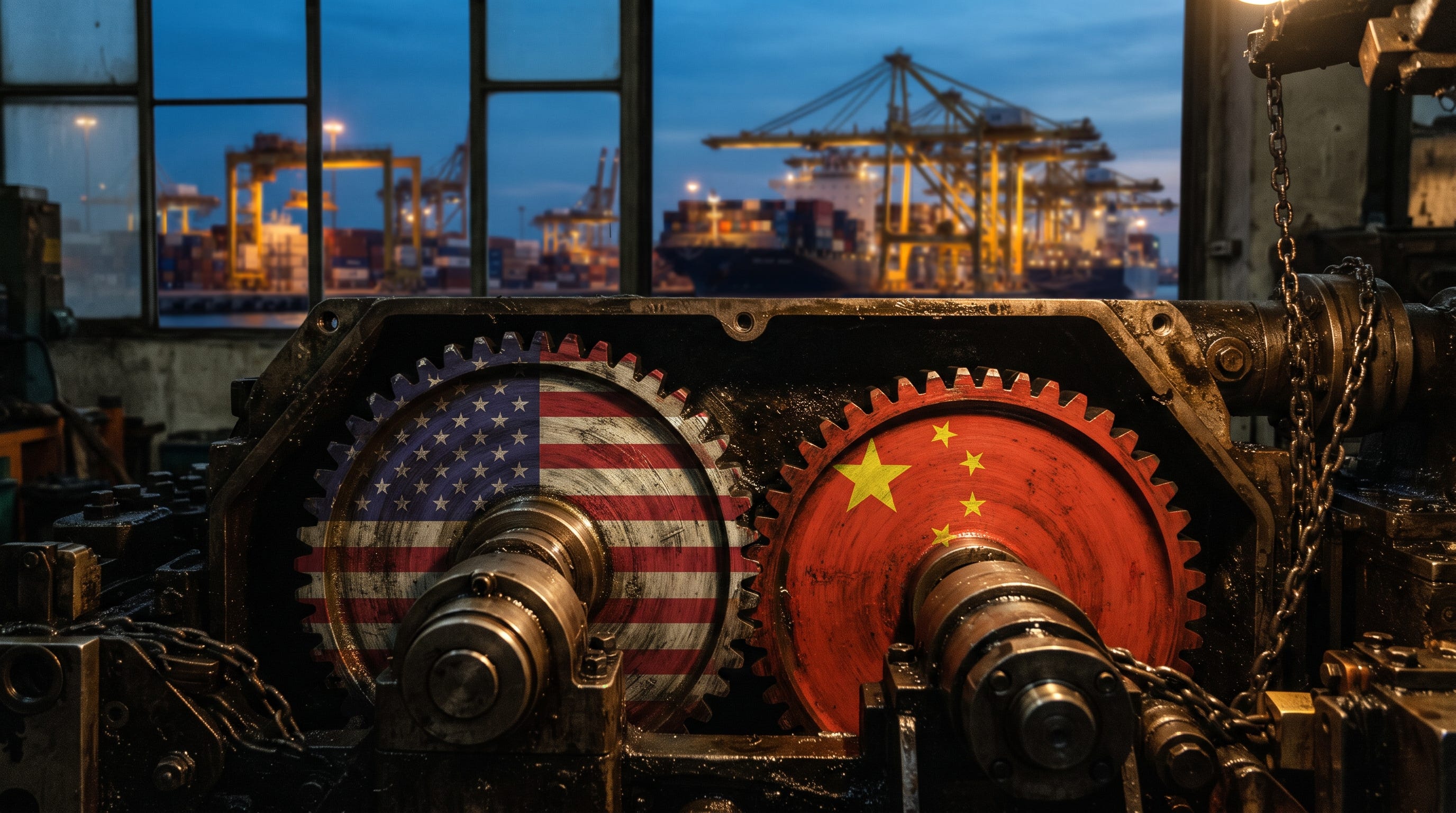
If you rely solely on headlines from Washington and Wall Street, you might conclude that the US and Chinese economies have completely parted ways. In recent years, terms like “decoupling,” “de-risking,” and “small yard, high fence” have dominated the discourse. With tariff barriers rising and sanctions lists lengthening, it appears the two superpowers are heading toward an irreversible economic Cold War.
However, if you shift your gaze from political speeches to ports, cargo ships, customs data, and the financial statements of multinational corporations, a vastly different story emerges.
A surprising new development has just come to light: US-China trade is staging a robust recovery.
According to the latest 2026 data released by the Global Times and Chinese customs authorities, bilateral trade in goods between the US and China reached a staggering figure of nearly 2 trillion yuan (approximately US$294 billion) in the first half of 2026—despite years of tariff friction, sanctions, and ceaseless talk of “decoupling.”
What is truly striking is the dramatic turnaround behind these figures: in the first quarter of 2026, bilateral trade volume had contracted sharply by 18.7%—a decline that initially led proponents of “decoupling” to celebrate.
Yet, by the second quarter, trade rebounded strongly, growing by 13.7%. Specifically, in June, China’s exports to the US rose by 14% year-on-year, while US exports to China surged by 26%.
Washington and Beijing may be engaged in a strategic contest, but global supply chains tell a different, cold, and rational story: from electric vehicles (EVs) and industrial components to soybeans and everyday consumer goods, the world’s two largest economies remain deeply intertwined.
Far from arriving, the era of complete decoupling appears increasingly distant.
In this article, we will cut through the geopolitical fog to explore why the US and China possess a natural, irreplaceable complementarity in the short term. More importantly, we will reveal a crucial yet rarely discussed trend: for the industries of the future that the U.S. prides itself on—artificial intelligence (AI) and robotics—to achieve true commercial profitability, they simply cannot do without China’s massive and irreplaceable market.
The Truth Behind the Data: Why Has “Decoupling” Become a Political Illusion?
To understand the resilience of U.S.-China trade, we must first dissect the peculiar data from the first half of 2026.
Q1 Plunge and Q2 Surge: Market Forces Self-Correct
The 18.7% contraction in the first quarter was largely the result of a combination of policy-induced panic, seasonal factors, and short-term global supply chain adjustments. Faced with new geopolitical noise, many companies adopted a “wait-and-see” approach or stockpiled goods in advance.
However, the strong rebound in the second quarter (+13.7%) demonstrated a harsh economic reality: political will cannot defy economic laws in the long run. Once inventories were depleted and the costs of alternative supply chains became prohibitively high, companies had no choice but to return to their most efficient suppliers.
In June, China’s exports to the U.S. grew by 14%, while U.S. exports to China surged by 26%; this mutual boom illustrates that:
The cost-effectiveness of “Made in China” remains irreplaceable.
China’s demand for U.S. agricultural products, high-end manufactured goods, and energy remains robust.
The Hidden Truth of the “China Plus One” Strategy: A Smoke Screen of Re-export Trade
Many cite Mexico overtaking China as the U.S.’s largest source of direct imports as proof that “decoupling” is working. Yet, a deeper analysis of supply chains reveals this to be nothing more than a “numbers game.”
From Southeast Asia to Latin America, the countries that have absorbed manufacturing capacity shifted from China rely heavily on Chinese intermediate goods, raw materials, and machinery. Chinese companies build factories in Mexico, ship components from China to Monterrey for assembly, and then cross the border into Texas.
While customs data records this as an export from Mexico to the U.S., in terms of the value chain, American consumers are still buying products driven by Chinese supply chains. This “indirect trade” has not weakened U.S.-China economic ties; instead, it has lengthened supply chains and increased costs for the end consumer.
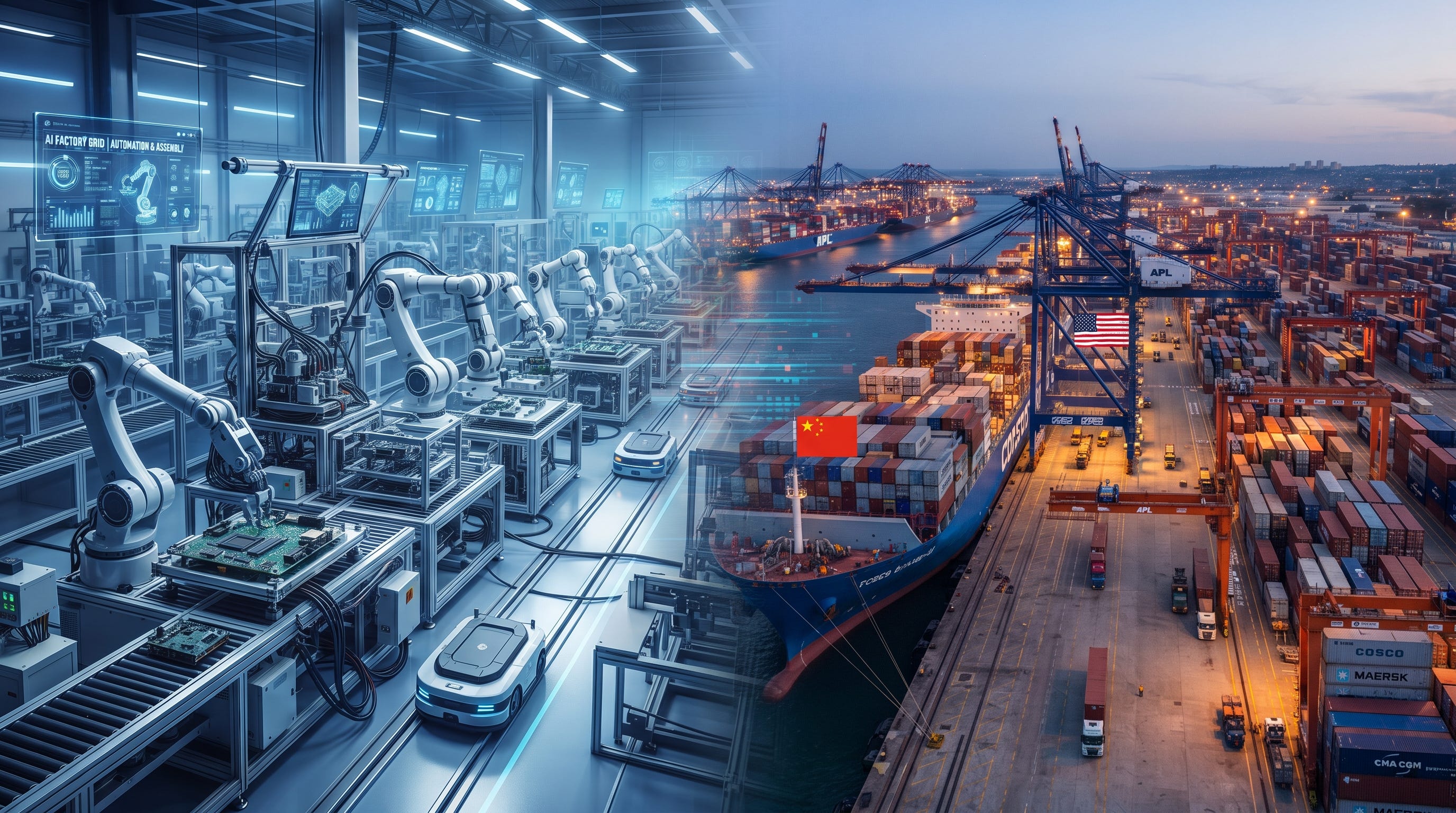
The Foundational Bedrock: The Natural Interlocking of the World’s Largest Factory and Largest Market
The underlying logic of macroeconomics is actually quite simple: supply and demand.
An Irreplicable “World Factory”: An Ecosystem, Not Just a Workshop
China’s status as the “World Factory” stems not merely from low-cost labor (in fact, China’s labor costs are no longer the lowest globally), but from the fact that it is the only nation possessing every industrial category defined by the UN’s industrial classification system.
Advantage of a Complete Industrial Chain: From a simple screw to the most complex precision instruments, one can find every necessary supplier within a 200-kilometer radius in the Pearl River Delta or the Yangtze River Delta. This extreme clustering effect yields unparalleled advantages in terms of time and logistics costs.
Infrastructure and the “Engineer Dividend”: Extensive high-speed rail, port, and 5G networks, combined with millions of STEM graduates annually, form a formidable “moat” for China’s manufacturing sector. While Vietnam, India, and Mexico might capture a share of specific segments (such as labor-intensive assembly), replicating the entire ecosystem is utterly impossible in the short—or even medium—term.
A Voracious “World Market”: The US Consumer’s Need for Affordable Goods
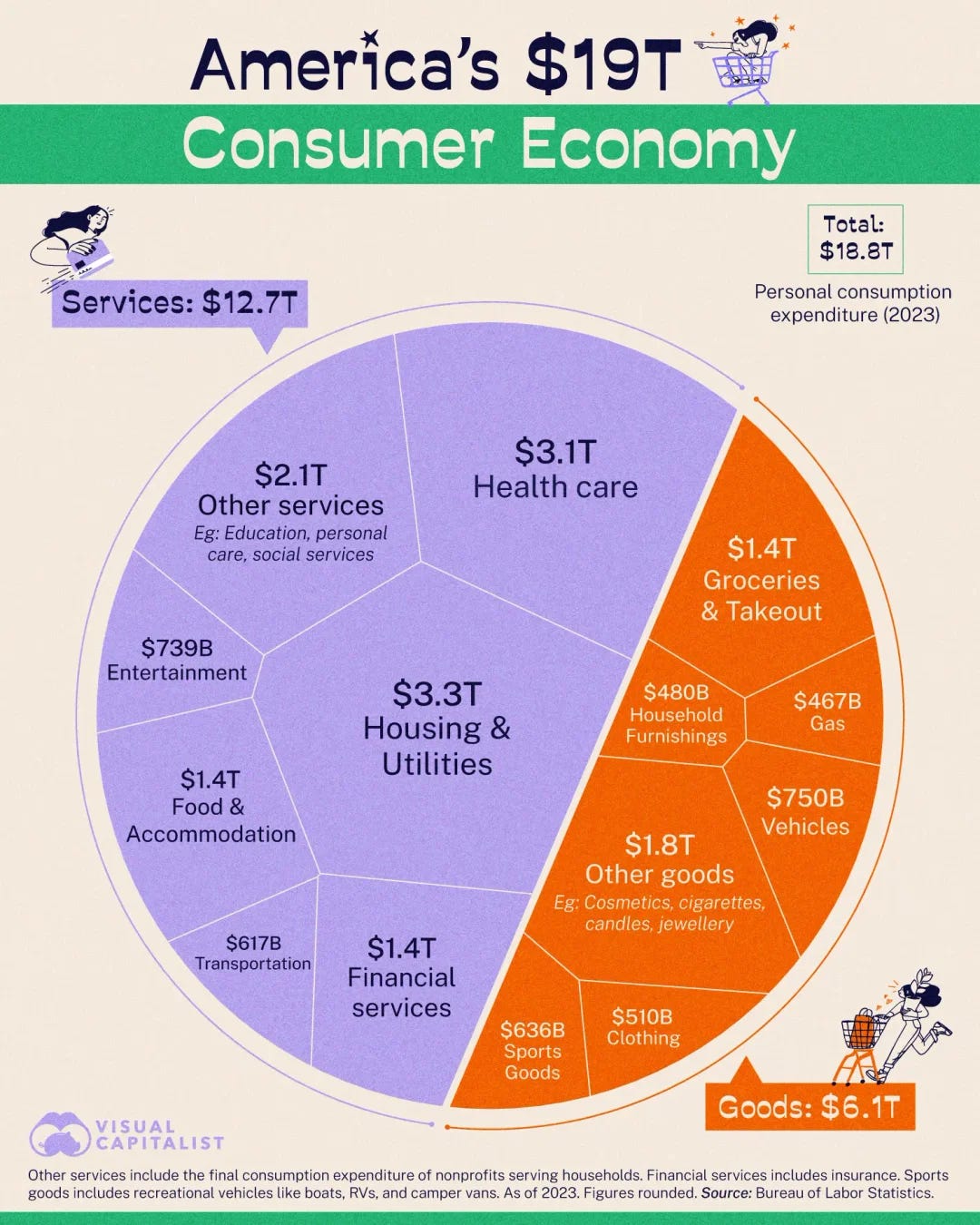
On the other side, the US is the world’s largest consumption-driven economy, with consumer spending accounting for nearly 70% of its GDP. After enduring persistent inflationary pressure, American households have become acutely sensitive to the cost of living—reaching historic highs in this regard.
Although Washington has attempted to bring supply chains back home (“reshoring”) through high tariffs, the US has long since lost the infrastructure and skilled workforce required for the mass production of low-to-mid-end consumer goods.
Forced decoupling would lead to only one outcome: runaway inflation. Amidst the political cycles of midterm and presidential elections, no US administration could bear the political cost of prices spiraling completely out of control.
Consequently, the high-quality, low-cost goods provided by China serve, in essence, as a “ballast” helping the US keep inflation in check.
When these two extreme forces meet—one boasting unparalleled production efficiency and the other possessing an insatiable appetite for consumption—their interlocking relationship is structural and rigid; it is by no means something that can be easily severed by a few executive orders.
Future Battlefronts: Why the US AI and Robotics Industries Cannot Do Without China?
If consumer goods and agricultural products served as the “old ballast” of China-US trade, then the coming industrial revolution will forge a new, far more inextricable bond between the two nations.
Many believe that the US holds an absolute advantage in the foundational technologies of artificial intelligence (AI) and robotics—a confidence that underpins the notion that the US can decouple from China. However, this view overlooks the core business logic of high-tech industries: the amortization of R&D costs and economies of scale.
The Costly Nature of AI and Robotics: Astronomical R&D Expenses That Must Be Recouped
Whether training next-generation Large Language Models (LLMs) or developing bipedal humanoid robots capable of replacing humans in complex physical labor (such as Tesla’s Optimus or Boston Dynamics’ robots), the required capital investment is staggering.
While the R&D phase is exorbitantly expensive, the marginal cost of replicating software and algorithms is virtually zero; similarly, the marginal manufacturing cost of hardware robots drops exponentially as production volume surges.
This leads to an ironclad rule: whoever captures the largest market share can best amortize R&D costs, thereby generating the cash flow needed to sustain investment in the next generation of technology.
The Proving Ground for the Robotics Industry: China’s Massive Manufacturing Base
US robotics technology is formidable, but to whom will these industrial- and commercial-grade robots be sold?
The answer is clear: to the place with the most factories, the most production lines, and the most urgent need for automation upgrades.
China accounts for over 30% of global manufacturing value-added.
As China’s population ages and the younger generation shows less willingness to work in factories, the demand for industrial automation, machine vision, intelligent warehousing, and even general-purpose humanoid robots is exploding—representing a genuine, hard demand.
If US robotics companies are barred from the Chinese market, they will lose the world’s largest base of B2B customers. Consequently, they will fail to achieve the most economical scale of production, and the cost per robot will remain prohibitively high.
Ultimately, they risk defeat in the global arena by competitors—even those with slightly inferior technology—who can leverage China’s vast market to rapidly drive down costs.
The Data Flywheel and AI Deployment: China as the Ultimate “Application Testing Ground”
AI is not merely an accumulation of computing power in a laboratory; it is a system that requires constant real-world interaction, feedback, and iteration.
Autonomous Driving and New Energy Vehicles (EVs): Despite competition between the US and China in the EV sector, many US technology companies—such as those providing autonomous driving chips, LiDAR, or software algorithms—rely heavily on the data generated and the procurement volume driven by China’s massive fleet of new energy vehicles.
AI Deployment Scenarios: From smart cities and smart grids to complex supply chain logistics scheduling, China’s incredibly diverse range of application scenarios serves as a natural breeding ground for the deployment of AI algorithms.
For US companies aiming for global applicability in their AI solutions, excluding China—a market of 1.4 billion people generating the most complex industrial data—would be tantamount to self-sabotage.
The US may possess the best “AI brain,” but without China acting as the world’s largest “mechanical body” to execute tasks and monetize results, that brain would inevitably atrophy from a lack of nourishment (profits and data feedback).
Executives at US AI giants and robotics firms know better than anyone: to survive this capital-intensive “war of attrition,” the cash flow from the Chinese market is a matter of life and death.

The Micro-Realities of Complex Supply Chains: Deep Interdependence
Beyond macro-level complementarities and future technological ties, the specific realities of micro-level supply chains also render “decoupling” unfeasible in the short to medium term.
Green Interdependence: New Energy and Rare Earths
The world is transitioning toward clean energy, a sector in which China holds absolute dominance. From the polysilicon used in solar panels and key components for wind turbines to electric vehicle batteries (produced by companies like CATL and BYD) and the rare earth smelting and refining technologies underpinning these industries, China’s share of the global supply chain frequently exceeds 70% or even 80%.
If the US intends to meet its ambitious climate goals for carbon neutrality by 2030 or 2035, completely abandoning China’s mature, cost-effective, and high-quality new energy supply chain is entirely unrealistic. Rebuilding such a supply chain would require not only trillions of dollars in investment but also more than a decade of time. In the interim, the urgency of climate change will not wait for the US.
The “Super VIP” of U.S. Big Agriculture
Looking back at the 26% surge in U.S. exports to China, a significant portion consists of agricultural products. Farmers in the U.S. Midwest—producers of soybeans, corn, and pork—rely heavily on Chinese buyers.
The demand for high-quality protein from China’s vast middle class sustains the livelihoods of hundreds of thousands of American farming families. This is a politically sensitive constituency; any political maneuver that disrupts these exports would trigger a massive backlash in Washington.
Moving Beyond Narratives to Embrace Reality
The trade figures for the first half of 2026—totaling nearly 2 trillion RMB—serve as a resounding slap in the face to those who champion the theory of “total decoupling.”
On the geopolitical stage, the U.S. and China are indeed engaged in structural strategic competition; yet, within the vast machinery of globalization—which has been running with precision for four decades—the gears of both nations have long been deeply interlocked.
China’s productivity as the world’s largest factory remains undiminished;
The U.S.’s purchasing power as the world’s largest market remains robust;
The coming AI and robotics revolution requires a perfect synergy of capital, technology, and markets from both nations to achieve true commercial prosperity.
In the short term, decoupling is not an option—not merely because of the high sunk costs of the past, but because of the deep intertwining of future interests.
We live in an era filled with noise. For investors, entrepreneurs, and observers, the greatest pitfall is allowing oneself to be swept up by grand political slogans while ignoring the cold, hard figures on the balance sheet.
Supply chains have memories, and capital chases profit; driven by the gravitational pull of efficiency and returns, the underlying currents of the U.S. and Chinese economies continue to flow across the Pacific and quietly converge.
The truly wise do not sell off assets in a panic over “decoupling”; instead, they look to the reality of “rebalancing” to identify those indispensable, great enterprises that are effectively hedging their bets across both markets.
The author’s views are their own and do not necessarily reflect the blog’s.
📌 Subscribe to Think BRICS for weekly geopolitical video analysis beyond Western narratives. Follow also our new channels BRICS Business and Think BRICS Chronicles.
 | A guest post by
|
Lot of data, a little too exhaustive though (for my attention span...). Nonetheless, well researched, and drives a point.
Trade is a curious thing. No trade; the economic engine shuts down. Need to keep it chugging along.
Present & future are not mutually exclusive, though. If anything, they go hand-in-hand, when it comes to strategy.
I would reckon that the predicament with China-US dependency would apply to most other countries too, that trade with the US, and are looking to break the stranglehold.
Notwithstanding all of what is said, it's important to keep the eye on the sparrow - crashing the dollar/petrodollar chokehold.
When it comes to strategy: A Mohanlal (a Malayalam actor) dialogue in a movie jumped to my mind.... "I start thinking where you stop thinking." Indians and Chinese are pretty good at strategizing! A concerted effort is required. (I'm well aware that there is a lot of historical baggage that needs to lighten up...)
The point is that hurdles do exist. The challenge lies in overcoming it.
I enjoy your articles. They are insightful, focussed, and mostly well balanced. Keep it going.
Cheers mate!!
Parece perseguição. Porém, mais uma vez, as colocações do nobre articulista chocan-se com a realidade.
Realmente não sei onde ele tirou um "pensamento", que insinua seja majoritário, de que percebe o "desacoplamento" iminente das economias de EEUU e China. Quem pensa assim não poderia estar mais enganado. Ou está praticando um jogando muito apreciado pelos Thinkthanks americanóides de manipular o governo Trump, por si só altamente manipulável, e a imprensa americana, torcendo para que comprem esta bobagem.
Enquanto isso o governo chinês segue seu plano quinquenal, implementando todas as ações dentro do tempo e dos custos avaliados e procurando atingir as metas antes do previsto. E dentre as metas previstas, certamente não está o desacoplamento. Aliás, se lermos atentamente o texto de nosso ilustre articulista, podemos verificar que na verdade há cada vez mais uma dependência da economia americana à economia chinesa.
Já um parco conhecimento geográfico mundial é suficiente para rebatermos as afirmações da dependência chinesa pela energia americana.
Afinal todos sabemos quem é o provedor oficial de energia para os chineses: a Rússia neste aspecto não está para brincadeiras, ampliando sua capacidade logística para desviar todo o gás antes consumido pela europa, para a China.
Já as terras raras tem sua industrialização como monopólio chinês desde que sua utilização foi ampliada com os avanços tecnológicos.
Por último, o futuro demonstra que a China reunirá todas as condições para reunir todos os atributos para estabelecer sua hegemonia que é baseada na multipolaridade. Enquanto restará aos americanos, se conseguirem se livrar da sua superficialidade e da sua arrogância, ou serem dos últimos vagões a se juntarem ao trem do desenvolvimento sustentável e multipolar, ou naufragarem, morrendo abraçados sua extrema direita fascista e seus liberais de fancaria, levando junto sua democracia de mentira e sua sociedade civil corrupta.