

Is China Really Quitting the Dollar? The High-Stakes Game of Financial Hide-and-Seek
Is China dumping the dollar or playing a financial shell game? A look into the cunning strategy of hiding US assets to appease politicians and dodge sanctions.

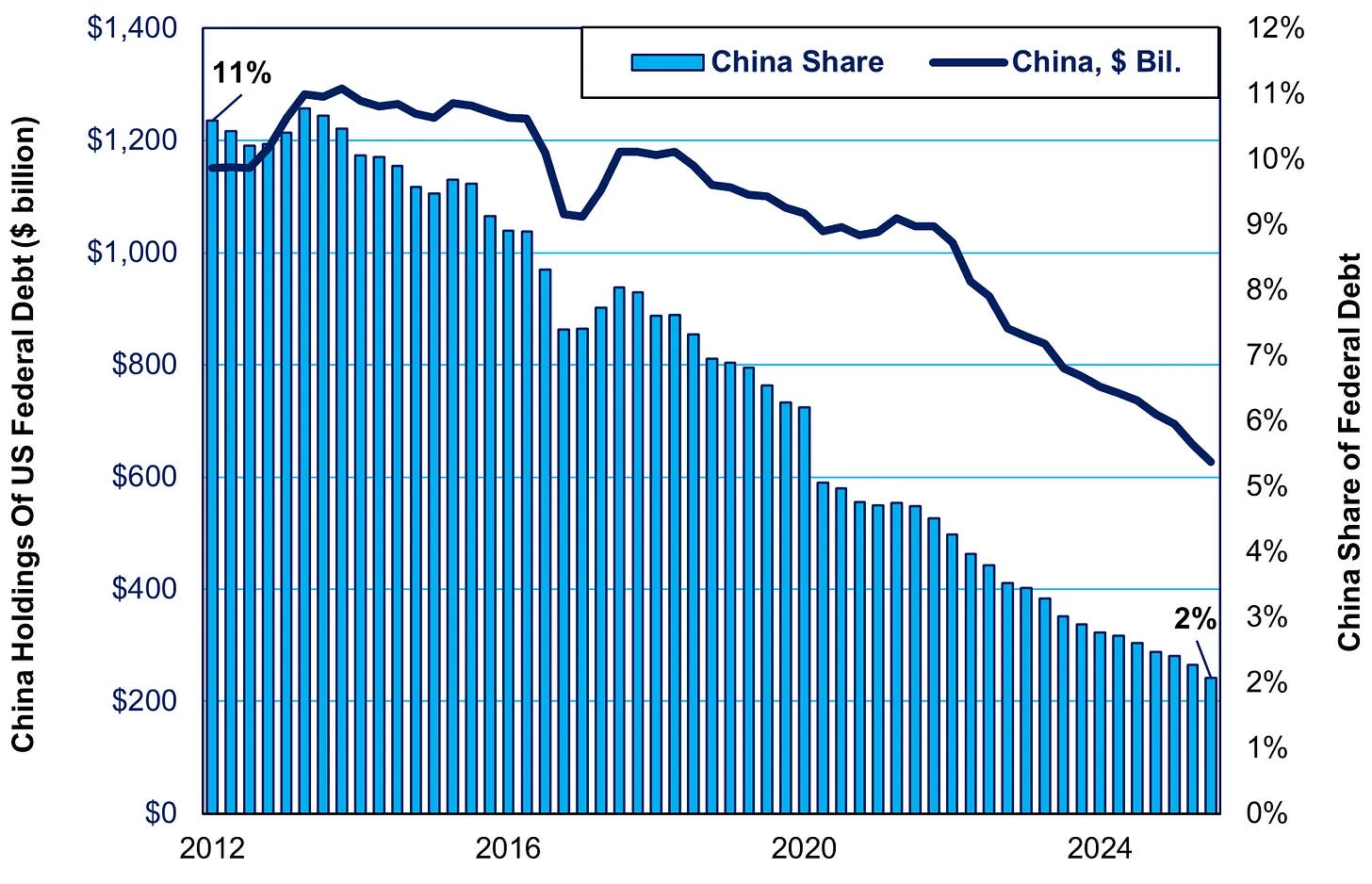
There is a narrative currently sweeping through financial circles and BRICS-focused blogs: China is “dumping” its US Treasury bonds to escape the dollar’s grip. Headlines point to a dramatic 50% drop in China’s holdings—from $1.2 trillion down to roughly $600 billion—as proof that the “end of the dollar” is near.
But is this a strategic exit, or just a clever move to hide assets in plain sight? When we look deeper, especially through the lens of internal Chinese geopolitics, the story becomes much more complex.
The “Plumbing” vs. The Politics
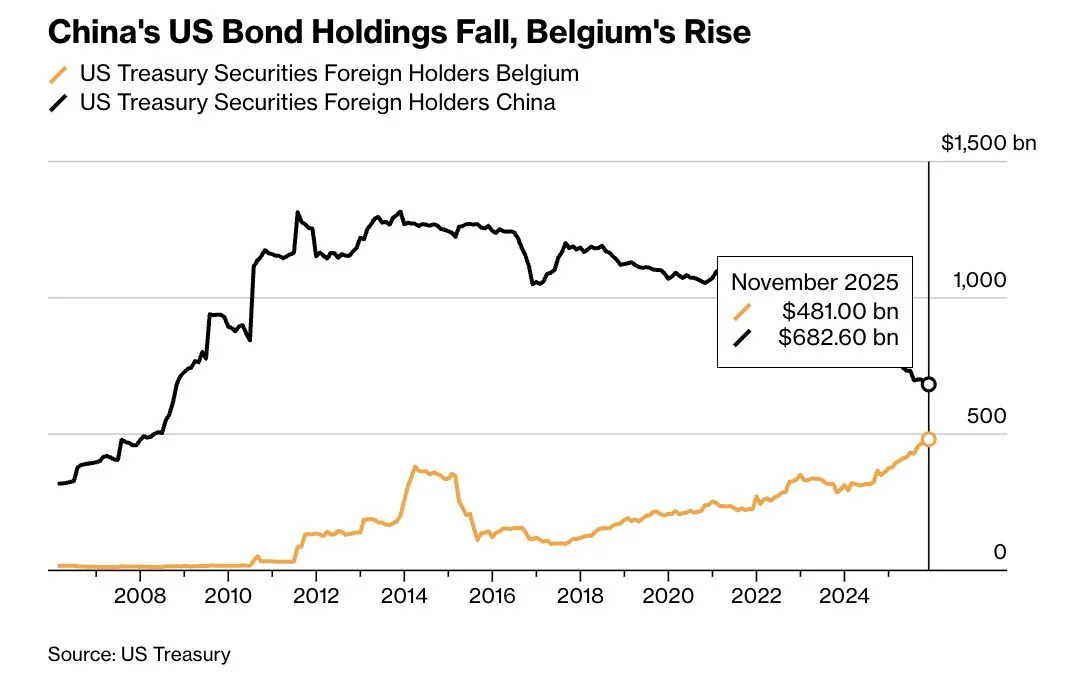
On the surface, the data looks like a fire sale. However, financial experts point out that the US Treasury tracks where bonds are stored (custody), not always who the “true” owner is. Over the same period that China’s official holdings dropped, holdings in tiny countries like Belgium and Luxembourg spiked by hundreds of billions.
The theory is simple: China isn’t necessarily selling; they are moving their “storage units” to European hubs like Euroclear in Belgium to gain operational efficiency and, more importantly, to shield themselves from potential US sanctions, similar to those that froze Russian assets in 2022.
The Insider’s Angle: A Cunning Compromise
This is where the geopolitical aspect becomes fascinating. According to Jian Lian, a distinguished Chinese economist specializing in the Chinese economic system, particularly the government system, there is a plausible explanation for this enigma.
For him, this change is not only about market efficiency, but also about China’s internal political survival.
Chinese President Xi Jinping has been very clear in his demand that the country reduce its holdings of US government securities. However, the People’s Bank of China (PBoC) is often viewed as one of the most “pro-Western” institutions within the government, valuing the stability and liquidity that only the US dollar provides.
This creates a conflict: How does the PBoC satisfy the Party’s political requirement to “de-dollarize“ without actually hurting the Chinese economy?
The Solution: The PBoC may have adopted a “nominee holding“ model. By moving bonds to Belgian or Luxembourgish financial institutions, the PBoC can report “cleaner” books to the Chinese leadership, showing a reduction in US debt, while the assets actually remain in the Western financial system under a different name.
The Hidden Surplus: Furthermore, it is estimated that a massive portion of China’s annual trade surplus—potentially up to $2 trillion—is no longer being funneled directly into the central bank’s official reserves. Instead, it stays “dispersed” across large state banks like the ICBC, held in various Western assets that don’t appear on the PBoC’s official balance sheet.
Is the “Dumping” Real?
Not everyone agrees this is just a shell game. Some argue that China is genuinely dumping Treasuries—noting a $75.5 billion drop in 2025 alone—and that the rise in Belgian holdings is simply global banks fleeing an “over-regulated” US market.
However, if China were truly liquidating its position in a panic, we would likely see massive stress in global funding markets and surging bond yields, which hasn’t consistently happened. Instead, China still relies on the dollar to keep the yuan stable and its exports competitive.
What Do You Think?
Is China truly leading the BRICS charge toward a post-dollar world, or are they simply playing a “cunning” game of financial plumbing to keep their options open? By using European hubs, they seem to be seeking a way to stay in the dollar system while lowering their profile to avoid political heat.
We’d love to hear your thoughts in the comments: Is this de-dollarization, or just a smarter way to manage the same old dollar-based system?
Join the Conversation:
📌 Subscribe to Think BRICS for weekly geopolitical video analysis beyond Western narratives.
AS an American, I stand with China. My country is now the United States of Israel. Corruption and Pedophilia is rampant, protected and enabled. This administration is as criminally negligent in every possible way. So, don't have much good to say about US/Israel at the moment.
I think it is too risky for China to be keeping huge sums of USD. Their USD could easily be frozen by the West. Moreover, China's trade with the US has deteriorated and looks likely to continue deteriorating. The USD has also weakened in value and demand for T bills has not been hot.