

Decoding China Just Launched, and the First Episode Alone Is Worth Your Time
Economist Jian Lian launches Decoding China, unpacking the real engine behind China's tech boom, from cheap delivery robots to a growth model the West keeps getting wrong.

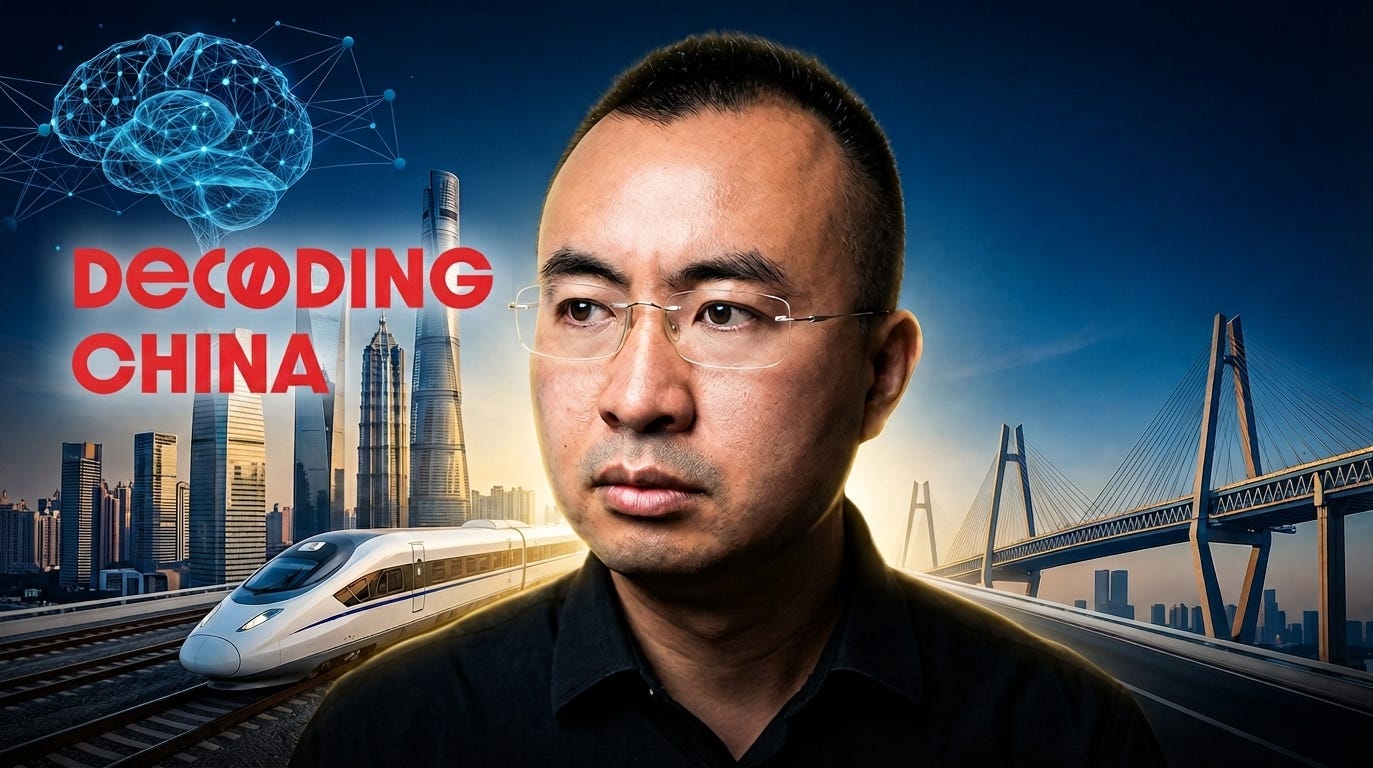
Every so often a new show starts and you can tell within minutes that the person behind the mic actually knows what they’re talking about, not because they’re loud about it, but because of what they choose to explain. That’s the feeling we got from the first episode of Decoding China, a new series from Jian Lian, an economist and industry analyst at HengCe Economic Research and a longtime contributor to Think BRICS.
Lian Jian isn’t a talking head parachuting in with hot takes. He lived through China’s high-speed growth era as a student, watched the 2008 financial crisis reshape global economics from the inside, and was involved in implementing “Made in China 2025.” He’s spent the last three years hosting foreign visitors in China and traveling abroad himself, watching in real time as people’s assumptions about the country collide with what they actually see on the ground. That collision, more than anything, is why he decided to start talking into a camera.
His pitch for the show is simple: the Western narrative on China swung hard between 2015 and 2022, and now the pendulum is swinging again as more people visit and see something that doesn’t match the story they were told. Jian Lian’s goal with Decoding China isn’t to sell you a rosier version of that story. It’s to explain the actual mechanics behind it, in plain language, from someone who was there.
The example that stuck with us most was one he used almost in passing: hotel delivery robots. According to the video, these robots cost around $13,000 each in 2020. By 2025, that price had dropped to $2,000 to $3,000, and some hotels now rent them for as little as $14 to $18 a month. Jian Lian walks through why: pandemic isolation rules created sudden real demand for contactless delivery, the underlying robotics technology had just matured after five years of development, and Chinese manufacturers competed so fiercely that prices collapsed within two or three years. It’s a small, concrete case, but it’s the kind of layered explanation, technology, timing, and competition all stacking together, that he says most Western coverage skips past in favor of a single dramatic headline.
He’s also refreshingly unwilling to hand you a simple story. He’s quick to point out that the same forces producing China’s low-crime, low-inflation, highly automated daily life also produce real strain: relentless competition among companies and workers, and social pressures he names directly, like falling birth rates. He describes China’s development model as something that resists the easy labels people reach for from outside, not a straightforward “state capitalism,” not the totalizing Communist-state caricature, but a system where the state actively regulates big corporations while market competition inside manufacturing is genuinely fierce.
What makes the show worth adding to your list isn’t that Jian Lian has all the answers. It’s that he’s building his explanations from firsthand experience rather than theory, and he says outright that he wants to engage honestly with skeptics rather than just the already-convinced, name-checking people like Tucker Carlson and India’s Pankaj Sharma as good-faith voices he hopes to talk with. For a BRICS-watching, Global South-curious readership that’s tired of both breathless hype and reflexive dismissal, that’s a rare combination.
This first episode is really a table-setter for what’s coming: the historical roots of China’s growth model, why its development is spilling outward into the Global South, and what a more multipolar future might actually look like in practice. If that’s the kind of nuance you come to this newsletter for, it’s worth fifteen minutes of your day.
📌 Subscribe to Think BRICS for weekly geopolitical video analysis beyond Western narratives. Follow also our new channels BRICS Business and Think BRICS Chronicles.
We need Chinese/BRICS/SCO alternatives to everything Western, better alternatives!
Poured it on a bit thick, here. Although it does sound interesting. This was a very western-type review.