

'Brazil Must Have Deterrence Capability to Defend Its Sovereignty,' Says Celso Amorim
Brazil's top diplomat Celso Amorim warns that sovereignty requires deterrence, not just dialogue — as Washington targets Brazilian gangs and tensions escalate from Venezuela to Iran and Cuba.

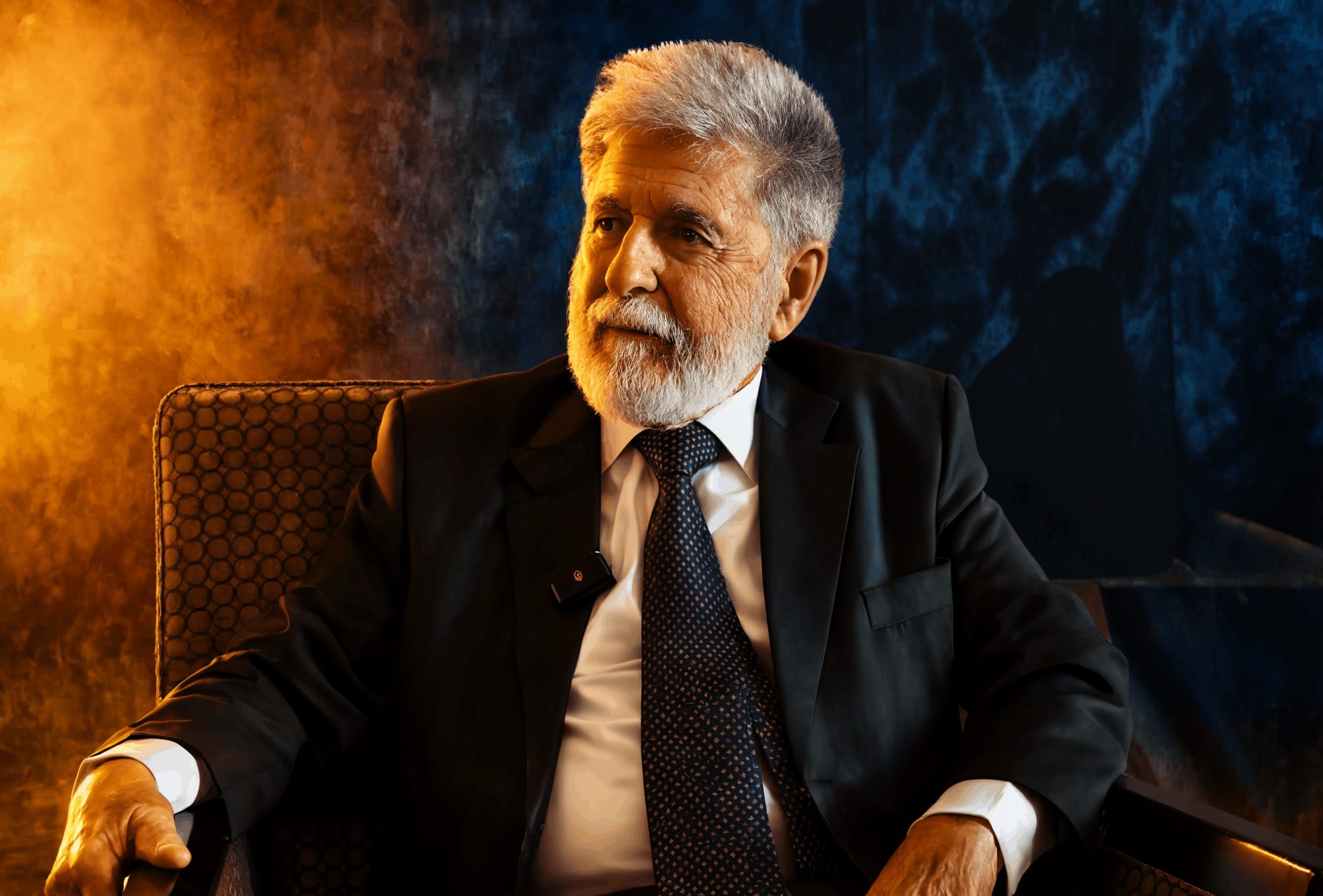
Originally published on Brasil de Fato by Marco Fernandes
Republished with permission.
Brazil’s Special Presidential Adviser Celso Amorim attended the 2026 International Security Forum in Moscow this week. In addition to meeting with senior officials of the Russian government, Amorim granted an exclusive interview to Brasil de Fato in which he commented on current conflicts and issues of Brazilian sovereignty.
The topic gained particular urgency in recent days after the United States government classified the Primeiro Comando da Capital (PCC) and Comando Vermelho (CV)—Brazil’s two largest criminal organizations—as terrorist organizations. Amorim was among the first officials to respond publicly on behalf of the Brazilian government.
In a formal address, the adviser stated that “another serious threat to [Brazilian] security is the growth of organized crime. The Brazilian government is acting decisively to dismantle criminal networks, including by increasing legal penalties and working in close collaboration with local authorities to strengthen their capacities. Organized crime must be fought with the utmost energy and determination. Equating organized crime with terrorism, however, is not helpful. Understanding motivations is essential for effectively combating all forms of crime.”
In his interview with Brasil de Fato, regarding the current state of Brazil–Russia relations, he acknowledged a degree of convergence, while noting: “I also spoke frankly with the Russians. Brazil’s largest trade deficit is with Russia. That has to change.” On the political front, however, “there has been a significant rapprochement. For eleven years—since the Dilma administration—there had been no high-level meeting of the Brazil–Russia High-Level Commission.”
Regarding Washington’s various interventions around the world, Amorim articulated the Brazilian government’s condemnation of the invasion of Venezuela and the war against Iran, and expressed deep concern over the situation in Cuba: “I believe a solution by force will not work and will result in a great many deaths and much suffering.”
Amorim also recalled, in detail, Brazil and Turkey’s joint attempt to broker a nuclear agreement with Iran in 2010—at the request of then-U.S. President Barack Obama—and expressed regret that no deal was ultimately reached: “They could have set up a commission to monitor compliance with the agreement if any doubts arose. Everything that was asked of us regarding Iran was delivered.”
Finally, the man who served as Foreign Minister throughout President Lula’s first two terms and as Defence Minister under President Dilma Rousseff raised a fundamental debate for Brazil—amid Washington’s interventionist offensive and the remilitarization of countries such as Germany and Japan—about what is required to defend national sovereignty: “You must have deterrence capability. I believe that is the bare minimum for any actor in international relations. It is all well and good to be a pacifist, it is all well and good to seek dialogue—but you need a little something to fall back on when push comes to shove.”
Full Interview
Brasil de Fato: Last June, shortly after the first U.S. airstrikes against Iran in the Twelve-Day War, you gave a live television interview in which you said: “The international order is over.” Since then, we have seen the extrajudicial killings of people aboard fishing vessels in the Caribbean, the invasion of Venezuela, another war against Iran, and Cuba may be next. How is Brazil responding?
Celso Amorim: President Lula’s starting point is the idea of dialogue. You just saw that, despite everything that happened before, he received an invitation to visit the United States. He went, he had conversations—we are talking about trade and can address other dimensions as well.
I believe President Trump was very respectful in his dealings with us. That is a positive thing. But there is no question: we have condemned what happened in Venezuela, and we are deeply concerned about Cuba—very much so. I made a comment, I think it was to Lavrov: “We are here in Moscow. Communist Cuba has now existed for nearly as long as the Soviet Union did. And the Soviet Union was the defining landmark of the twentieth century.” So it is an enormously dramatic situation.
Everything has been tried—boycotts, embargoes. I do not know what more they can attempt. I believe it will be very difficult to achieve there what was achieved in Venezuela. I did not expect what happened in Venezuela either, but I think Cuba will be even harder.
I believe that, although there may be discontent with the economic situation and other aspects—I am not defending the system—Cuba could evolve. But a solution by force will not work and will result in a great many deaths and much suffering. And Cuba carries a symbolic weight in Latin America, even for countries that disagree with its political system.
There is also no sense that the United States is overextending itself—not in military terms, which everyone knows are enormous, but in its political capacity for mobilization. There is a film I saw as a child, an American film called Skyjacked. There was a plane under threat. The point is: when there is a thread of hope, we have to work it, pursue it. I used to talk about “openings,” but today even those have narrowed to almost nothing—so you have to find a thread of hope.
Q: And did President Lula raise the issue of Cuba with Trump on that last visit?
He did raise his concerns. I was not in the meeting, so I cannot say for certain. I did not ask for details. But from what he mentioned, I believe he expressed that concern.
Q: How do you assess Brazil’s current position regarding the war the U.S. and Israel provoked against Iran? Brazil once attempted to mediate that conflict between the West and Iran many years ago—as you recount in your book “Tehran, Ramallah, Doha”—correct?
These questions depend greatly on circumstances. Today, for instance, it is Pakistan that is actively engaged—a country that typically focused only on its own interests. I find that very positive and even praised it in my address. Of course, Pakistan participates in the United Nations and the G77—I am not diminishing that. But it had never positioned itself as a mediator in these conflicts before. It has its own problems, as everyone knows, particularly with India.
Now a moment has arisen in which there are conversations under way. I believe Qatar is also re-engaging, which is also very significant. I do not know the details, but I think this gives some grounds for hope. Let us hope it leads somewhere. It does not have to be Brazil doing the mediating—we are interested in peace.
In fact, regarding what President Lula always references in connection with the Tehran Declaration—Brazil and Turkey’s joint mediation attempt in 2010—it was Obama who asked for it. What I cannot understand is why the Brazilian media said “Why is Brazil getting involved?” Brazil did not insert itself. Obama asked, in three clear points: 1) the greatest challenge in the world today is the Iranian nuclear program; 2) I extended my hand and received no response; and 3) I need friends who can speak to those I cannot speak to myself.
Those three sentences were more than enough, weren’t they? And to leave no room for doubt, he sent Bill Burns—who would later become Deputy Secretary of State under Obama and subsequently CIA Director under Biden—to meet with me. I was Foreign Minister at the time. Then President Ahmadinejad visited Brazil. We kept the conversation going, gradually building trust. In the end, there was a moment of uncertainty.
There was a point at which I myself said: “Mr. President, I don’t think this is going to work—we had a meeting in Washington with the Turks that was very negative.” Then, on returning to Brazil, we had a BRICS meeting scheduled. The following day, I opened a copy of a letter from Obama to Lula reiterating exactly the same three points. So I said: “Now we have to try.”
There was still a small technical discrepancy—the quantity of enriched uranium—but it was discussed and resolved. The French also appealed to us, because there was a French woman being held. We spoke with President Sarkozy—perhaps in Manaus, because the French also consider themselves part of the Amazon region (French Guiana is a French overseas department, a kind of French colony)—and he said: “I cannot speak to Iran while they are holding her.” So I asked: “But if they release her, will you engage immediately on the substance?” He said yes. It then took them more than three months to do so.
By then there were already sanctions in place. In any case, this is all history now. But it demonstrates that with genuine political will, it is possible to reach an agreement on something that is not easy—because countries are internally divided. Sometimes one faction wants to move forward, another does not.
Q: But why did it ultimately fall apart? Was it sabotaged by the U.S.?
I believe there was a division within the United States. I have written about this at length, though it was some time ago. There were the midterm elections. The Secretary of State herself—Hillary Clinton—was a presidential contender. I noticed at least a certain nuance, a difference in emphasis, between the Secretary of State and the President. And Iran was not easy either. We would bring proposals, they would take time to respond, things would go back and forth. But in the end, we reached an agreement.
What surprised me most, though, was something else entirely. Obviously, what was decisive—in terms of the failure—was the American position. They had asked us to act, they had wanted this. But what surprised me was that all the permanent members of the UN Security Council voted in favor of the resolution imposing sanctions. And that planted in my mind the idea that certain problems, only they can resolve. Particularly in the nuclear domain, because the P5—the five permanent members of the Security Council—are also the N5: the five countries recognized as nuclear-weapon states under the Nuclear Non-Proliferation Treaty. There are others that have nuclear weapons, but they are not recognized as such: India, Pakistan, North Korea, Israel.
Q: Israel doesn’t officially acknowledge it, does it?
It’s ambiguous. But everyone knows. When pressed, they don’t deny it.
I believe they consider the nuclear question to be, in a sense, their exclusive domain. That is the only explanation I have. Because they gave Russia a small concession, gave China a small concession—they allowed Iran to keep exporting oil to China and Russia—and they permitted Russia to complete a nuclear power plant in Bushehr (not an enrichment facility, but still). Only Brazil and Turkey voted against. It was the only time Brazil voted against a resolution that passed in the Security Council. Lebanon abstained.
Q: What year was that?
2010. A month and a half after the declaration.
The first thing I did after leaving the chamber was speak briefly with Lavrov, then I telephoned Tehran. But the first long conversation I had was with Hillary. She had been the one making the request. “It’s no use,” she said—”we’re going to proceed with our push for sanctions.”
I believe that was a disaster. I am not saying Brazil could have made everything work on its own, or that someone else might not have come in to complement the effort—there are always uncertainties. You sign an agreement, but you can never be entirely certain how it will be implemented. They could have created a commission to monitor compliance, to handle any doubts that might arise. But everything that was asked of us regarding Iran was delivered.
Q: And what about the current conflict?
I do not know what will happen. But I believe the objectives initially announced by the United States—at least rhetorically, of sending Iran back to the Stone Age—will not be achieved. Iran is one of the world’s oldest civilizations. I always mention that the oldest surviving Greek play opens with a line about Persia.
No one is going to bomb a country into becoming a democracy. It doesn’t work that way. It happens through conversation, through dialogue, through an appreciation of cultural differences. Of course, we can be critical of certain things—we would be. But we must respect the self-determination of peoples. Every society follows its own trajectory. Look at Brazil fifty years ago—how indigenous peoples and Black Brazilians were treated. Would that have justified bombing Brazil? No. We have to evolve on our own terms.
Q: You mentioned the UN Security Council, and Russia’s support for Brazil’s accession as a permanent member. Do you believe there is a deepening of the multilateral agenda between Russia and Brazil in the context of Donald Trump?
I hope so. I met with a number of people—essentially everyone I had set out to see, with the exception of President Putin, whom I did not request a meeting with. But I did leave him a letter from President Lula regarding the Bachelet matter.
I think there is a genuine rapprochement. That said, I also spoke frankly with the Russians. Brazil’s largest trade deficit is with Russia—and that has to change. I understand that the war has driven Russia toward greater self-sufficiency; they used to import beef and no longer do. We import diesel and fertilizers—and at increasingly high prices, not through any fault of theirs, but costly nonetheless. And our exports to Russia remain very limited.
On the political level, the rapprochement is significant. For eleven years—since the Dilma government—there had been no high-level meeting of the Brazil–Russia High-Level Commission, at the level of Prime Minister and Vice-President. Our Vice-President has now stepped back from the Ministry of Industry and Trade, which is a major portfolio. And President Lula himself attended the lunch to lend the meeting his personal prestige. Shortly afterward, there was already a technical-political follow-up meeting—their Minister of Development came to Brazil and met with our acting Foreign Minister.
So I believe this is a very propitious moment for dialogue. Lavrov himself recalled that when Venezuela was invaded—when President Maduro was effectively taken hostage—it was President Lula who called for an emergency BRICS meeting.
I think this is a good moment in the bilateral relationship. We are advocates of multipolarity, but we are equally advocates of peace. We recognize that, historically, NATO’s expansion unsettled Russia—perhaps with justification, or at least understandably. But we also do not want a solution that comes at the cost of massive civilian casualties.
That is precisely why Brazil and China proposed a dialogue-based solution. Before Trump took an interest in the matter, we had already proposed and established the Group of Friends for Peace. Perhaps now is the moment to draw on that. Clearly, with attention currently concentrated on Iran—and, should it come to that, which I hope it does not, on Cuba—everything becomes more difficult. We are already living through a world war of sorts. Not a world war in the traditional sense, with all conventional forces fully engaged, but there is no region that remains untouched.
Not even Latin America, which is normally so tranquil. There was an invasion of Venezuela. And no one knows what will happen in Cuba. This is extremely concerning. Brazil must defend its sovereignty. We cannot simply look on and say: “Oh, nothing like that will ever happen to us, because Brazil is a peaceful country.” That is no guarantee. I served as Defence Minister. When the day comes—and one never wishes to single out any particular country—we must have deterrence capability. The legacy of the military dictatorship created a deep resistance to this idea among the public—but those in the know are well aware of the necessity.
Q: This is a theme that is returning with great force in Brazil. We are watching the Iranian case**. Many analysts agree that the United States is losing that war—but Iran spent nearly forty years preparing for it, developing its defence capabilities, its deterrence arsenal, its missiles and drones. Is it time for Brazil to revisit, for example, the discussion on nuclear weapons or other deterrence capabilities?**
Brazil enshrined the prohibition of nuclear weapons in its Constitution. And I believe that today—while no one denies the importance of nuclear deterrence—there are significant non-nuclear means of deterrence that Brazil can and should develop. People sometimes hold a mistaken view: “Oh, you’re not going to go to war with Country A or B because you’d lose.” That is not the point. The point is your capacity to inflict sufficient pain—to raise the cost high enough—to deter an aggressor.
In earlier eras, when a German ship and a British ship were both sunk, Churchill would count how many British had died versus how many Germans. Today it is entirely different. When body bags start arriving home, it no longer matters whether you are winning the war.
Compare the Vietnamese and American casualty figures—there is no comparison. But who won the war?
So here is my view: we must have deterrence capability. We must be in a position to say: “I do not want conflict, and you are not going to impose it on me by force. Let us talk. Let us engage in dialogue.”
This can apply to critical minerals; it can apply to any number of issues. We need to have this capability—not targeted at any specific country. People have grown accustomed to thinking in terms of U.S. dominance, but tomorrow it could be anyone. It can happen. You must have deterrence capability. I believe that is the bare minimum for any actor in international relations. It is all well and good to be a pacifist, it is all well and good to seek dialogue—but you need a little something to fall back on when push comes to shove.
Q: China stopped Trump with rare earths: “We are no longer selling to you.” Trump backed down immediately.
And now Iran has stopped the United States—a massive disproportion of forces. That is exactly the point: raising the cost of an interventionist adventure.
📌 Subscribe to Think BRICS for weekly geopolitical video analysis beyond Western narratives. Follow also our new channels BRICS Business and Think BRICS Chronicles.
Simple: Learn from Iran. Throw away those useless, hugely expensive Saab Gripen and concentrate on all kinds of missiles (hypersonic), drones (including fiber optics), satellites and Air Defense Systems like russian S400, S500, all operated and coordinated by AI, areas where BRICS true (unlike India, UAE) Partners China has the lead and Russia close second.
With them, Brazil [as Iran and Russia have proven on the battlefield] can also easily beat ultra rich, mighty, near obsolete, war criminal, pirate, accomplice of Genocide US armed forces.
Brazil abandoned a nuclear weapons program around 1990, will they resume such developments now in self defense?
https://www.armscontrol.org/act/2006-04/looking-back-lessons-denuclearization-brazil-and-argentina