

Beyond the Pattern: Why the Global Order is Being Reimagined Right Now
Multipolarity is no longer theory—it's a messy, fluid process reshaping our world. From weaponized trade to BRICS coordination, explore how a new global order is dismantling Western-led hegemony.

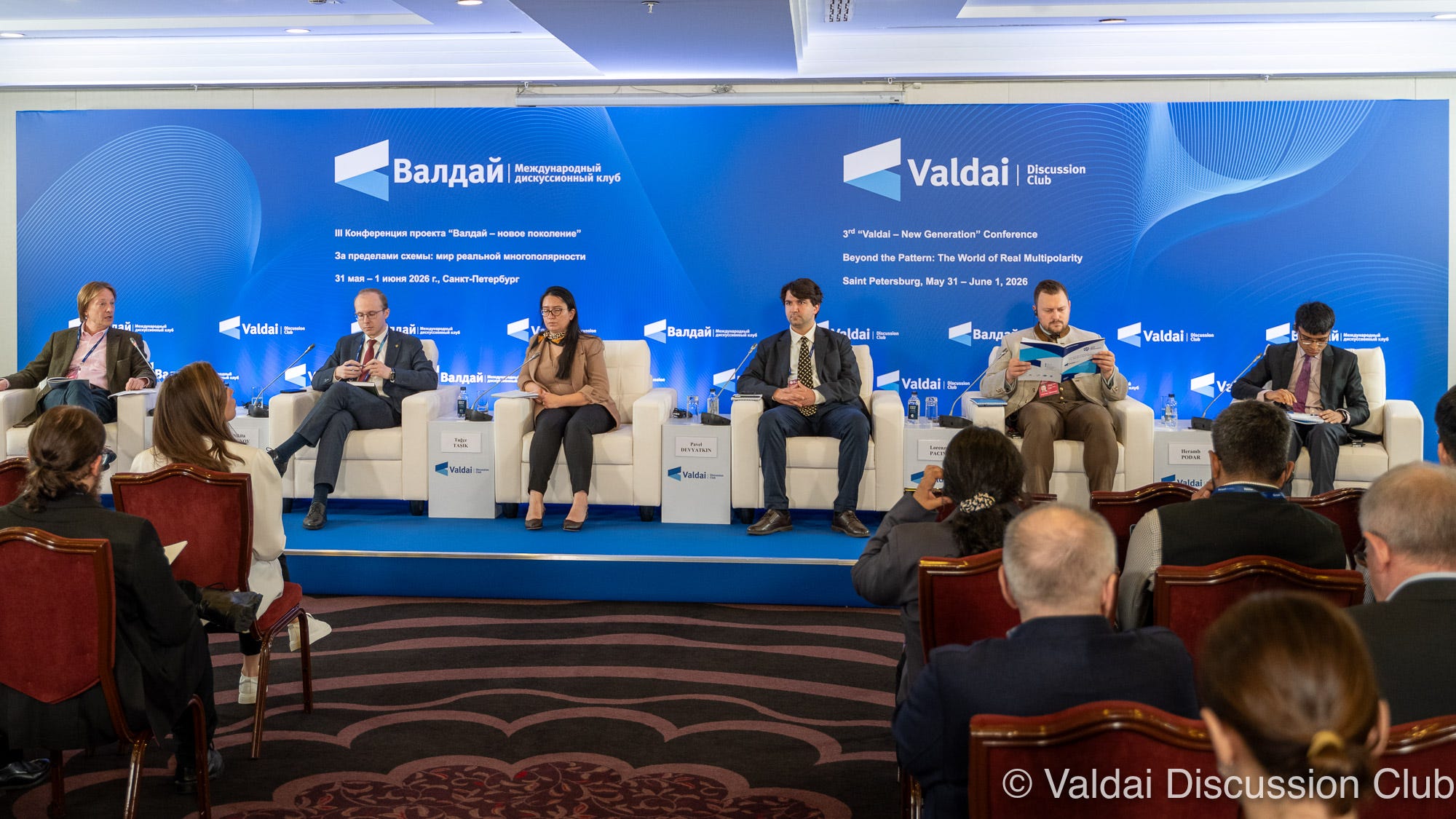
The halls of the St. Petersburg International Economic Forum (SPIEF) have always been a barometer for the shifting winds of global power, but in June 2026, the atmosphere felt different. It wasn’t just the presence of new tech giants or the usual talk of trade deals; it was the unveiling of a landmark report titled Beyond the Pattern: The World of Real Multipolarity. Presented by a new generation of scholars, including our team member Professor Lorenzo Maria Pacini, this wasn’t just an academic exercise—it was a declaration that the old Western-led hegemony has transitioned into something far more complex, fluid, and urgent.
For decades, we’ve operated under the “pattern“ of a global order defined by Western standards of democracy and market capitalism. But as the report makes clear, we are now living in a world that has moved past those rigid lines. We are witnessing a fundamental reordering of power where multipolarity isn’t a distant destination or a fixed end-state, but an active, messy process that is reshaping everything from the smartphone in your pocket to the security of the Arctic.
Multipolarity: A Process, Not a Destination
The first thing to understand about the “new normal“ is that multipolarity doesn’t look like the Cold War. There are no iron curtains or rigid blocks where you are forced to pick a side. Instead, the world is characterized by what the report calls “situational alignments“.
Think of India. It is simultaneously deepening technological cooperation with the United States while maintaining strategic ties with Russia and pragmatic engagement with Iran. This isn’t confusion; it’s the new strategy. Multipolarity today is a “dynamic balancing process“ where states move beyond rhetorical declarations and start building practical, functional frameworks for cooperation. It is less about who you are “against” and more about who you can coordinate with on specific issues like alternative payment systems or supply chain security.
The Weaponization of Everything
Perhaps the most startling insight from the Valdai report is how the very foundations of our prosperity—trade, technology, and finance—have been transformed into “weaponized interdependence”. In the old world, the goal of trade was efficiency. In the new world, trade is a tool of statecraft used for pressure, punishment, and exclusion.
The report maps this out through a fascinating “three-tier“ system of states:
Major Powers (The System-Shapers): These are the actors like the US, China, Russia, and the EU who have the “structural reach“ to build and enforce global chokepoints. They use everything from “technology-stack controls” to financial sanctions to maintain their advantage.
Middle Powers (The Swing Enforcers): Countries like Japan, India, and Brazil hold the cards here. They are the “pivotal nodes“ that can either enforce a major power’s sanctions or act as “insulators“ that prevent a truly bipolar system from emerging. They are constantly “multi-vector balancing,” trying to maximize their own sovereignty by playing the major powers off one another.
Small States (The Exposure Managers): For everyone else, the world has become a constant exercise in risk management. These states focus on building redundancies and “fall-back mechanisms“ so that a single chokepoint doesn’t collapse their entire economy.
BRICS: Coordination Over Confrontation
A common Western narrative portrays BRICS as an “anti-Western“ alliance, but the scholars in St. Petersburg argued for a more nuanced view. BRICS isn’t interested in a “systemic rupture“ or a direct military confrontation with the United States. After all, no BRICS member wants to sever ties with the global economic system they are still deeply embedded in.
Instead, BRICS acts as a “projection“ of the multipolar world. Its strength lies in “functional interaction“. By developing common financial mechanisms and unifying technology standards, BRICS members are gradually increasing their autonomy “around“ Western dominance rather than just fighting against it. It’s a slow-motion transformation that focuses on practical sovereignty rather than symbolic shouting matches.
The Multipolarity of Meaning
Perhaps the most profound shift is happening in the realm of ideas. For decades, the “End of History” narrative suggested that Western liberal democracy was the final, universal goal for all of humanity. The Valdai report argues we are entering a “multipolarity of meaning“.
This isn’t just about different political systems; it’s about “epistemological decolonization”. Countries in the Global South are reclaiming their right to define their own values and development paths. Professor Pacini and his colleagues emphasize that for these nations, sovereignty isn’t just a legal status—it’s the freedom to validate their own indigenous knowledge and social organizations without seeking external Western validation. We are seeing a global demand for “authentic pluralism“ where diverse civilizations coexist rather than being homogenized into a single Western standard.
Regional Grounding: Where the Map is Changing
This isn’t just theory; it’s visible on the map in three critical regions:
Europe: The old “transatlantic consensus“ is fracturing. The report notes a “gradual American disengagement“ from European affairs as the US shifts its focus to smaller, more flexible alliances like AUKUS. Europe is at a strategic crossroads: it will either become a series of competing “micro-zones“ or attempt to build a new, stable security architecture that finally addresses its relationship with the rest of Eurasia.
Central Asia: Once viewed as a mere resource prize for great powers, Central Asian states are now asserting their own “fluid architecture“. They are recalibrating their strategies, signing multi-billion dollar deals with the US while simultaneously strengthening institutions like the Shanghai Cooperation Organization (SCO) and participating in China’s Belt and Road Initiative. They have even begun resolving century-old border crises on their own, without the mediation of “great powers“.
The Arctic: Once a model of “exceptional cooperation,” the Arctic is being pulled into “unmanaged rivalry“. The exclusion of Russia from circumpolar cooperation and threats of Greenlandic annexation have turned the region into a “militarized frontier“. The “Arctic exceptionalism” of the post-Cold War era is effectively dead, replaced by a “managed fragmentation“ where NATO and Russia operate in separate, increasingly armed realities.
Historians of the Present
The scholars who presented this research at the SPIEF 2026 view themselves as “historians of the present“. They aren’t trying to sell a specific solution or a new utopia. Instead, they are documenting a world that is “surfing through issues“ without a single set of universal rules.
The take-away for the rest of us is that the “pattern“ of the last thirty years has been broken. Power is redistributing, trade is being weaponized, and the very meaning of “progress“ is being contested by civilizations that refuse to be ignored. We are entering a future of “managed fragmentation,” where success will be measured by a state’s ability to build resilience and navigate a world that is no longer waiting for Western permission to change. This isn’t just a shift in geopolitics; it’s a shift in the way the world understands itself—and it’s happening right now.
📌 Subscribe to Think BRICS for weekly geopolitical video analysis beyond Western narratives. Follow also our new channels BRICS Business and Think BRICS Chronicles.
Western Liberal Democracy being a cover for 'free trade', where countries are looted by the west for their resources and forced to take on unpayable debt, plus sanctions, regime-change, demonization etc. if you don't play the game.
".. defined by Western standards of democracy and market capitalism." — sure, but those ‘standards’ were not ‘market capitalism’ nor ‘democracy’ qua Marx or most classical economists, for which there are no monopolists and oligarchs. Not even remotely close to patriarch Athenian democracy. justsayin.